Wednesday, December 6

Saturday, December 2
I have recently discovered the Yahoo Answers site. For those that haven't found this yet it works by people posting questions to which others reply - not unlike the columns that appear in newspapers and magazines in the UK. It has been quite fun exploring, particularly on topics that interest me. What is of concern, however, is the fact that kids appear to use it to get others to write their homework/assignments/projects. I thought kids these days knew how to use the internet - they ask questions on the site, the answers to which can easily be found by using a search engine or wikipedia. Some appear just to type in the qestions or topic they have been asked by their teacher or instructor. What is even more alarming is the type of question I saw the other day 'I am a teacher instructing my class about the Mycaneans I believe the Philistines were similiar, what can people tell me about the Philistines and thier way of life ' Again, the answer can be found in 10 seconds by using a search engine. What kind of people are teaching kids today? Then there is the type of question which says 'does anyone know of a website for the Blackacre Historical Railway Society' Well, you fool, just type 'Blackacre Historical Railway Society' into your address bar and you will find out - probably more quickly than asking a damn fool question here. Which brings me to my point - are people just stupid, lazy or what? Aren't kids taught at school to use the internet properly? Was George Bernard Shaw right when he said 'those that can, do, those that can't, teach'? Am I just a grumpy old man?
Thursday, November 23
Addendum to earlier post - Historical awareness
I commented in my post of this morning on the lack of historical knowledge exhibited by many. I was watching the same TV quiz show this afternoon that gave rise to the Sir Francis Drake answer I cited. Today the question was 'in what century did William the Conqueror invade England' 'The 17th' came back the answer from a person in their mid-twenties. Oh heavens - do they not teach kids about 1066 and all that these days? Do people have no idea of their roots? Perhaps I am being uncharitable and in the heat of the moment and under the studio lights the contestant muddled up William the Conqueror with William of Orange who, of course, did invade in the 17th century. But sssh...we mustn't use the word 'invasion' for the 'Glorious Revolution' of 1688. We must maintain the fiction that England (as opposed to Scotland, Wales and Ireland) has never, ever been invaded but has remained inviolate and chaste.
Modes of Address, and more
In my last post concerning the pally modes of address used in the UK, I said that the police tended to use forenames. I was wrong, having caught briefly last night a reality TV dealing with police operations. When they stop a male they now call him 'mate'. This word is becoming more and more common. 'Mate' used to mean 'pal', 'friend' or, in American usage, 'buddy' or 'bud'. Now it seems it is used willy-nilly to all and sundry, however well known or not they may be. I must deplore the disappearance of the old fashioned police sarcasm when, for instance, they stopped a speeding motorist. 'Oh dear, oh dear, Sir, going a bit fast were we. Off the the mother-in-law's funeral were we? Would you just step out of the car Sir.....'
Changing the subject, and returning to a more formal Britain, I've been discussing our old school with my brother recently. I should explain to those unfamiliar with the English educational system that in our day pupils took the '11+' examination usually sometime after their 11th birthday, although in my case it was about 4 months before. If you were successful, you went to 'grammar school', if unsuccessful to a 'secondary modern'. The former were designed to train the future clerks etc. of this world with a small minority going eventually to University or Polytechnic. The idea of the latter was presumably train those not of an academic bent to become manual workers. I remember young girls in the early teens in my then group of friends who were attending the local secondary-mod who had been placed in a stream learning sewing etc. Even at age 13 or thereabouts they were described as learning 'trade'.
I had told my brother that I disliked everything about our old school. I was surprised to hear in return that he shared my views. We both had passed the 11+ and had been sent to the same grammar school. We both agree that it was nothing more than a forcing house for state examinations. Little or no effort was made to treat pupils as individuals with individual needs and aspirations. There was little or no joined up thinking between the various disciplines we were studying. For example, in later life I learned I have very restricted airways (it is difficult to intubate me if I need an operation, so I am told by doctors). This clearly affected both my ability to do sport as I loose both breath and energy quickly, and my ability to sing. These facts were not appreciated by the sports and music departments respectively. All these thoughts were brought to mind by reports recently that many schools now are underachieving despite constant monitoring of staff etc. Pupils are allocated a 'Counsellor'. Bullying is abhored (although still practised - this is Nation Bullying - Anti Bullying ? - Week apparently). Both the breadth of subjects taught and the methods of teaching have changed out of all recognition since my day. I wonder what would happen now to the Chemistry master who was totally incapable of maintaining discipline and whose classes were noted my the number of teenage boys outside the lab door having been ejects for fooling around. or the Games master, a middle European, whose accent was hard to understand at the best of times, but which got worse and worse as he was misunderstood leading to mutual incomprehensibility and anger on his part and fear on the part of the boys he was trying to instruct.
I could read and write before even I went to school at 5 years old. I am not sure what I brought away from my Grammar school that has ever been of use to me in later life. I did learn how to read an Ordnance Survey map, and to enjoy Geography generally. I love History - I know that Sir Francis Drake lived in the 16th century, unlike a contestant on a well known TV quiz recently who placed him firmly in the 19th! However, all those hours of trying to understand quadratic equations, to read Caesar and Herodotus in the original have served no purpose since I left school (although I can read Greek street and direction signs...)
Tuesday, November 21
Informality
An American friend asked me recently whether the neighbouring children (all sub-teens) called me 'Mr' followed by my forename . I had to reply no, they just call me by such forename. This led me to consider what an informal nation we are becoming. I know (from TV, the movies etc.) that Americans call males 'sir' and females 'madam' with far greater regularity than we Brits do. I don't think I've called anyone, other than magistrates or District Judges, 'sir' in seriousness since I left school - when 'sir' was the way we addressed male teachers, females being called Mrs or Miss X. This accorded well with the habit (at my school) that boys were called by their surnames, girls by their forenames. When I first started work I worked in the same firm for 12 or so years and (as I may have remarked elsewhere on this blog) throughout those years I was invariably addressed as 'Mr'. As a child I called neighbouring males that I knew well 'uncle' and females 'aunt' whether or not I was related. Those I did not know were called Mr or Mrs. When I became a teenager, and was heavily involved in church affairs, I think I called my seniors 'Joe Smith' or 'Jane Smith' as the case might be, but never plain 'Joe' or 'Jane'
Things in this country are so much more informal these days. I don't know what happens in schools, but it seems to me that the only people who use 'sir', or 'ma'am' are those in the armed forces or police force when addressing superiors. Everyone else is 'palsy-walsy' and uses forenames. If you are stopped by the police, say, for a minor traffic offence, they will look at your drivers licence, see your forename and use that as the form of address It's the same in the doctor's surgery or in hospital. No more 'Mr' or 'Mrs Jones'. It's use your forename straight away. I know some find this objectionable. The idea is, I know, to 'break down barriers' but sometimes it is better that there are some to preserve a proper professional distance and use of a surname as a mode of address keeps that distance - at least, that's how I feel.
Things in this country are so much more informal these days. I don't know what happens in schools, but it seems to me that the only people who use 'sir', or 'ma'am' are those in the armed forces or police force when addressing superiors. Everyone else is 'palsy-walsy' and uses forenames. If you are stopped by the police, say, for a minor traffic offence, they will look at your drivers licence, see your forename and use that as the form of address It's the same in the doctor's surgery or in hospital. No more 'Mr' or 'Mrs Jones'. It's use your forename straight away. I know some find this objectionable. The idea is, I know, to 'break down barriers' but sometimes it is better that there are some to preserve a proper professional distance and use of a surname as a mode of address keeps that distance - at least, that's how I feel.
Tuesday, November 14
Packaging, etc.
Yesterday, our television news was filled by stories that the Government had a meeting with the supermarkets in an attempt to cut down on the amount of packaging. Apparently, the average family spends £50 a week on food and of that £480 odd a year is due to the cost of packaging. Quite deplorable. However, the suggestion was made that consumers should 'do their bit' by removing packaging in the supermarkets and leave it for them to re-cycle. I wonder how good an idea that is? In my small town we have only one decent sized supermarket. Were I to upset them, I could be barred which would result in my having to drive a 35 mile round trip to the nearest alternative - not very green!
There is something the Government itself could be doing, however, as paymaster of the NHS and that is cut down on the amount of packaging used by the drug companies. I take a number of medications supplied to me on repeat prescription, yet each time I get a leaflet telling me how to take the particular drug, what the side effects may be, etc., etc. This is quite unnecessary. Also some of the pills are packed in enormous boxes. I take one particular stomach remedy once daily. The capsule is about half an inch long and I get four weeks supply at a time, or 28 capsules. These are packaged 7 to a blister strip (which is part plastic, part foil, and I am not sure, therefore, whether recyclable.) The four blister strips come in a box approximately 5 and half x 2 and a half x 1 and a half inches. I am sure this could be cut down by half as much at least. I am old enough to remember when pills etc. were dispensed in bottles or small cardboard pill boxes. I realise that a couple of the reasons this was stopped was to remove confusion over whether or not a particular dose had been taken and also to prevent overdoses on the basis that a person might think twice whilst fighting to get pills out of the packaging. I do wonder, however, whether that might not be a argument for going back to old fashioned dispensing, at least for the more innocuous drugs.
Going back to food, the press has been full recently of stories concerning the collapse of the Christmas hamper company, Farepak. For those who may not be familiar with the idea, people would save a sum of money weekly via an 'agent' and come Christmas would be able to redeem the savings for food, Christmas presents etc. The facts that the goods supplied are usually far more expensive than those that could be brought in the shops and that it would be more economic to put the money in a savings account and let it earn interest escapes most people. However, the collapse of Farepak has left a large number of families not knowing how they might afford Christmas this year and the Government has stepped in and persuaded supermarkets, etc. to issue vouchers to some of those who have lost their money. I have been left wondering exactly why the Government should be acting as Santa Claus in this way. What do they know concerning the collapse of the company that is not being told? Many companies have collapsed with consequent losses to Joe Public but the Government has no stepped in. Further, why should a company which really should have no cash flow problems - bearing in mind is is raking in money all year round, but only has expenses at the end - collapse? All very, very odd.
Thursday, November 9
Drug Shortage
Well, that heading might get automatic word checkers going for a while! But I am talking about prescribed drugs! For some while now, I have been taking a daily dose of finasteride, a drug prescribed for a fairly common condition experienced by middle-aged men (Going into Les-Dawson-in-drag mode, heaving at false bosoms, mouth making a moué 'it's 'is waterworks you know', looking round to see if anyone is listening, ' 'is down belows'). I have to take this drug, I'm told, for the rest of my life, and I am able to get it on 'repeat prescription', i.e. without having to see a doctor. I went for such repeat at the beginning of the week, but was told by the pharmacist that they were having difficulty getting it. 'We'll speak to the doctor' she said. I told her I was to see him about something else a couple of days later, but would check with her first what the supply situation was. On doing so, I was again told that there were 'supply difficulties'. I saw my doctor who confirmed those difficulties and said that if they did not resolve themselves he would prescribe an alternative (dudasteride). The pharmacist telephoned me this morning to say that she was dispensing the prescription for that alternative today.
Now this leads me to enquire. Why is there this shortage of a drug which is specific to one complaint? It doesn't give a high or a low so there is no reason for supplies to have been hi-jacked for illicit uses. Has the Russian Mafia cornered supplies and is trying to hold the west to ransom as an alternative to cutting off our gas supplies? It's all very peculiar.
Now this leads me to enquire. Why is there this shortage of a drug which is specific to one complaint? It doesn't give a high or a low so there is no reason for supplies to have been hi-jacked for illicit uses. Has the Russian Mafia cornered supplies and is trying to hold the west to ransom as an alternative to cutting off our gas supplies? It's all very peculiar.
Monday, October 30
Autumn Colours
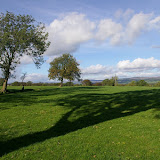
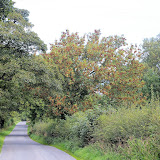
Some photographs taken in the past week or so around where I live. Although I've titled this posting 'autumn colours', those haven't really been very pronounced thus far this year. This is due, I have heard, to the fact that the weather has been so mild. Rich autumn colours are caused by frosts affecting the trees in late September/early October.
Friday, October 27
British Stupidity
1. Man in Swansea is fined £200 by magistrates for placing one sheet of paper in his blue recycling sack intended for tins and plastic bottles. Query - how did they prove this beyond reasonable doubt. Does Swansea Council employ recycling gauleiters on every block to report on their neighbours?
2. Teachers in Bath wished to help their pupils to cross the road in the absence of the lollipop person due to iill health They do not have the necessary safety training.
3. Apparently, according to a TV programme earlier this week 100s of foreign lorries are coming into this country which are unfit to be driven - e.g. the programme showed tyres that were split or bald, brake cylinders for trailers hanging loose - or where the drivers have exceeded their permitted driving time by many hours and are ready to fall asleep at the wheel. The body rresponsiblefor checking these wagons at ferry ports, mainly Dover, have about 40 engineers in total to cover the whole country. It was admitted that they can check, at most, 2 wagons per ferry. There are numerous reported cases of accidents, many fatal, being caused by such drivers.
Wednesday, October 18
More on Dress
The subject of female Muslim dress continues to cause comment and I therefore, make no apologies for returning to the subject so soon. I'd like to consider why this form of dress causes so much apparent offence. After all we have long accepted that Sikhs wish to wear their turbans and such, appropriately coloured etc, are accept, for example, as perfectly normal wear for Sikh police officers. We have long had communities of Hassidic Jews in the UK and do not object to their black hats, long black coats etc. However, observance of these dress requirements do not set the wearers apart as total aliens. The Sikh will wear a t-shirt and jeans with his turban, the clothing worn by some Jewish sects is not that different, albeit perhaps a little more extreme, than what other males wear from time to time. But what is more, you can still see the faces of the individuals concerned. In everyday human intercourse we make so many judgements, assumptions etc by looking at the faces of the people around us. Our first point of recognition of anybody is their face. After all, we are not animals who sniff each other as a form of identification. 'Why are you sad', we might say on meeting a friend with a downcast expression, or observing a big grin 'had a win on the horses then?' To so completely remove this every day norm by allowing only their eyes to be seen renders the ladies who wear the full veil as little more than aliens to us. And, if you appear so alien to most people, then, unfortunately, you are going to be treated like an alien.
There was an article recently in the Guardian newspaper recently by a Muslim lady who wore the full veil for a few days just to see what it was like. She reported that, in fact, it was totally impracticable as her breath made it very hot (I could imagine if you were wearing glasses they would steam up all the time) and it was impossible to know how to drink a cup of coffee in a café (although, possibly, strict wearers of the veil would not think of going into a café). It kept slipping down that the eye slit fell away from her eyes rendering her nearly blind! Children in supermarkets were frightened by her appearance.
Now I know this is a very serious subject, about which one must try not to be flippant. However, I cannot resist observing that a group of ladies dressed in this fashion remind me of nothing less than a group of black, ambulatory post boxes. Furthermore, they also remind me to a certain extent, of those well known monsters, The Daleks. If you don't know what I mean look at http://www.bbc.co.uk/doctorwho/gallery/. I know this is taking things to what maybe thought ludicrous extremes. But do other people share my vision as well. Is there a subconscious fear caused by this resemblance?
Monday, October 16
Dress
Since earliest times humankind has sought to distinguish rich from poor, caste from caste, officials from non-officials by their mode of dress. Until very recently dress has been a 'badge' by which a person's status could be identified.
This was particularly true in Rome both as a republic and under the emperors. The toga is seen as the quintessential item of Roman dress, but to wear that was a privilege only granted to full Roman male citizens. Foreigners were forbidden to wear it and so was a Roman citizen who might be exiled for one offence or another. Women, other than common prostitutes (for some reason) were also banned from wearing it. The toga itself had subtle differences to indicate age or distinction. One a male had reached maturity he was entitled to wear the toga virilis. Individuals of rank of curule magistrate and above were entitled to wear the toga praetexta with its broad purple band. Purple togas were worn initially only by victorious generals, and in later times by the emperors. All these requirements were enforced by sumptuary laws.
Such laws, governing dress and, indeed, such things as how many courses could be served at a banquet, were in force throughout medieval Europe and, in England at least, down to Tudor times. As a result 'medieval clothes provided information about the status of the person wearing them. This was not just dictated by the wealth of the person, it also reflected their social standing. Only Royalty were permitted to wear clothes trimmed with ermine. Lesser Nobles were allowed to wear clothing trimmed with fox and otter and so on and so forth!'
Later in history these laws fell into disuse, but still individuals felt they wanted to identify themselves by the type of clothes they wore. In 18th century England Beau Brummel and his set were considered very 'fast' because they started to wear trousers rather than tights, and in sober black and white, rather than gaudy colours as hitherto been the case. In due course the new became the accepted and the style settled how English gentlemen would dress for the next two centuries. The picture of the City businessman in his three piece pinstripe suit can be traced back to this 18th century revolution in dress. In the last two decades of the 20th century a certain type of young city whizkid started to wear red braces with this kind of suit (probably by now two- rather than three-piece) to show their perceived 'superiority'
Elsewhere, certainly in the latter half of the 19th and first half of the 20th century, a man's status could be identified by his head wear. A workingman would wear a cloth, flat, cap. A junior, in age or status, office worker would wear a more formal hat, latterly the 'trilby'. More senior office workers would wear their bowler hat whilst senior members of staff, and indeed upper class members of society in general, would wear the silk top-hat. I'm interested in the history of UK railways and in looking at old railway photographs it is very easy to identify the status of individuals appearing by the type of headgear they are wearing. On formal occasions, far example, it was de riguer for the station-master of a large station anywhere to appear in his 'topper'
In the last couple of centuries clothing has also become used, in certain instances, to identify a person's occupation. The armed forces increasingly over the past two or three hundred years have adopted a strict dress code to set them apart from civilians. This has been both practical - the adoption of khaki uniforms for the army instead of red, or more recently white for polar uses - or 'dressy' with each unit having smart uniforms to wear on formal occasions. I must admit that at times this can be slightly risible. I well remember many years ago staying in an hotel in Devon, near to the Royal Naval College at Dartmouth. During the stay, the hotel was used by the college for a passing out function for young midshipmen, who were dressed in smart waistcoats. 'Look', whispered a companion to me, 'a convention of Italian waiters!'
Other groups wear uniforms for greater or lesser practical purposes - police, nurses, boy scouts etc. However, within my lifetime the dress worn by the majority of the population has become highly democratised. It is sometimes difficult to tell man from woman and certainly almost impossible to tell a person's social status by what they are wearing (formal occasions such as Ascot Week always excepted.)
So why have I gone on at length about this? Well, yet again we are faced in this country with problems concerning Muslim dress. A teaching assistant has been suspended from her job for wearing the full Muslim veil. Now I understand that there is no religious requirement imposed by the Koran requiring this particular apparel. Women are merely exhorted to cover there breasts (which accords perfectly with western mores) and to appear dressed discreetly (I paraphrase, I admit.) But to quote from an Islamic site I found when researching the subject:- 'The debate on Muslim women's dress is endless. The sisters who opt for niqab (face veil) may appear to be brave, but we need to dispel the notion that niqab is what is originally required by the Qur'an, and the hijab is a later modified version of the original. In fact the other way round is true. The sisters who don the ordinary hijab can rest assured that they are following the injunctions of the Qur'an and Sunnah to the letter, and in their true spirit. '
I am bound to say that it appears to me that many of the young women who adopt the full veil have been born and bred in the UK. They appear to adopt this, rather extreme, form of dress to appear different from the rest of us. They are saying, just as the Roman senator in his purple edged toga did, 'look at me, I'm different to the rest of you plebs.' OK Muslin ladies, be different if you insist. However, this is the UK. We have moved on from sumptuary laws. We have moved on from class being defined by what one wears. While diversity in all things is to be applauded, to be so 'in your face' about it is going, in my opinion, to cause a backlash. This is, in fact, already happening. A lady has been suspended by British Airways for visibly wearing a cross. Apparently, visible jewellery of any kind is not permitted for the employees of that organisation. However, the lady in question is saying if Sikhs can wear their bangle and a turban, Muslim women a veil or headscarf, why can't a Christian wear a cross? Which is a fair comment.
Saturday, October 14
Iraq
It is ironic that at a time when here in the UK we are thinking about the Suez invasion of 50 years ago (and the Nuremberg War Crimes trials of 60 years past), chickens seem to be coming home to roost so far as the invasion of Iraq in concerned. We have the most senior British army officer saying the troops should be pulled out 'soon'. For an army officer to make such a political statement is unprecedented. George Bush was shown on UK TV saying that American troops would be staying for the foreseeable future - because of the 'terr'ist threat' that would be posed to the USA if they left. (Must admit to my English ears it sounded like the 'tourist threat' which raised all kinds of pictures in my mind!) I thought, however, that the invasion of Iraq was due to the perceived threat from weapons of mass destruction, not terrorism. How typical of a politician to twist facts to suite his own ends. It is also ironic to recollect, mentioning the Suez invasion, that the USA under President Eisenhower effectively pulled the rug from under the invading UK and France. He was having no dubious Middle East adventures by the western nations.
There has also been reported this week, by the prestigious medical publication, The Lancet, that the numbers of dead civilians in Iraq is far, far, higher than had been estimated previously. Of course, this is strenuously denied by wee Geordie Bush, but then, it would be wouldn't it. I know who I prefer to believe.
Finally, yesterday, we had a British coroner returning a verdict of 'unlawful killing' in respect of the death of a British journalist in Iraq (UK coroners have jurisdiction to hold inquests into the deaths of British subjects, whereever in the world the death occurred.) The evidence at the inquest was that, whilst following a story at the time of the invasion of Iraq, the individual concerned was shot in the shoulder by Iraqi troops. He was transferred to a vehicle bearing a red crescent, but was killed when that was shelled by American marines. To attack a vehicle clearly marked as being used for humanitarian purposes is, of course, contrary to accepted norms of behaviour and International Law. I'm sorry if I might offend any American friends who may read this, but it rather confirms the view that we have here that American troops can be gung ho and trigger happy. The family of the dead man are pressing for those concerned to be brought to trial. I'm not holding my breath. The USA can kidnap foreign nationals and take them to Guantanamo Bay and hold them for years without trial. Will they identify the marine unit involved and allow them to be extradited to the UK? I somehow think not.
Friday, October 13
What are we supposed to do?
Have you noticed how Governments (of all persuasions) exhort us to follow one, purportedly desirable, course of action on one hand and then, on the other, make doing so difficult, if not impossible? This dichotomy was forcefully brought home to me the other day. I occasionally attend a meeting in the nearest big town about 18 miles away and when I do go, I take an acquaintance from this town. In the past, if I have not been able to go, he has managed by himself using public transport. Now, it appears, this is impossible due to a reorganisation of the local bus services, most of which are supported with public funding. Whilst it is perfectly possible to travel to the meeting by bus in time for a 7pm start, returning home after a 9pm finish is more than difficult. Buses leave for our town at 5 minutes to 8pm with not another service until 11pm. So my acquaintance would be faced with a two hour wait, something he is unlikely to do. So where does Government exhortation come into this? Well, we are told, leave your cars at home, be green, use public transport. Don't drink and drive. Use public transport. Oh that we could!
Monday, October 9
BBC - Robin Hood
The BBC has started to show a new version of the Robin Hood story over this past weekend. And what utter rubbish it is. It appears that the 'arty-farty' types at the beeb have gone for a post-modern, deconstrutivist, telling of the tale. It opens with Robin and his faithfully retainer Much (the Miller's Son?) trudging back home after service in the 3rd crusade. All alone. We later learn that Robin is the Earl of Locksley. So an Anglo-Norman grandee. Where's all his retainers? Why is he not on horseback? Where is the armour he would have worn fighting the Saracens? Nowhere to be seen. He then arrives at Locksley Hall, which is designed as a cross between a small Tudor manor house and a spec-built 1930s suburban villa. It boasts a fireplace and chimney - something that would not be invented for another 150 - 200 years. Your 12th century 'hall' would have been just that - one large room with a fire in the centre and the smoke rising through the roof. The only private rooms would have been bedroom for the lord and his lady. On arrival Much decides he wants a bath. Really? Our 12th century ancestors were not so obsessed with personal hygiene as we are and probably never bathed throughout their lives.
OK, so it's just a TV programme and should I be bothered with all this. Well, yes, I think so. For one thing the BBC is funded by a tax on everyone who has the ability to receive a TV signal and therefore I think it needs to be very careful how it spends what is, after all 'our' money. Furthermore, the Robin Hood tale is a national legend. OK, the men in tights and funny hats may be totally erroneous. But that is how we see Robin and his band. If someone is going to tamper with our perceptions, then do so with care and don't end up with a farrago of nonsense.
Sunday, October 8
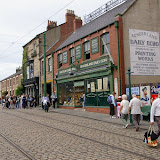
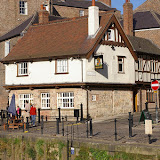
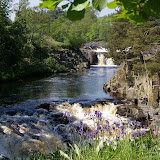
Friday, October 6
The Veil
I've just heard on the news that a senior politician in the UK, Jack Straw, has expressed the view that he feels 'uncomfortable' when speaking to Muslim ladies wearing a veil. There has, almost inevitably, been an outcry about this comment. But why? He didn't say that they shouldn't wear a veil, but merely expressed a personal view. Personal views of that nature appear not to be allowed in our politically correct age. Which is, of course, total poppycock. To all of us the unusual can be unsettling and it is certainly unusual in the UK for women, except for the bride at a wedding, to be veiled. We are also back to the problem of double standards viz a viz the Muslim world which is becoming more and more worrying. The leading Muslim country, Saudi Arabia, will not allow a church to be built, the bible to be sold or a cross to be shown. I read some where the question (on this point) 'would the Pope allow a mosque to be built in the Vatican City?' Doh! What a stupid comment. No one is suggesting that a Christian church should be built in the middle of Mecca. But I am sure that mosques exist elsewhere in Italy, outside the Vatican City and that it is possible, in that country, to buy a copy of the Koran. I fully believe, and support, the right for any individual to follow any religion of his choice, or none at all. It is a matter of personal belief. But there has to be give and take and at the moment it is my perception that there is far more 'take' by certain Muslims and very little 'give' If this leads to a backlash, can that be a matter of surprise. And are people so touchy that they cannot accept someone making an innocent, and understandable, comment like Jack Straw's?
Monday, October 2
Phishing emails
I guess I am just one of many thousands, if not millions, who get phishing emails from individuals claiming to be the manager or some other senior executive of the Central Bank of Burkina Faso in which I am told that a foreign national died in an air crash leaving many millions of dollars in the bank which cannot be dealt with due to that country's banking regulations without the intervention of another foreign national. The scam, for that is what the emails are, originated in Nigeria, so much so that the wuthorities in that country set up a special unit to deal with them. They work by soliciting the recipient's assistance in withdrawing the blocked funds in return for which they are promised a slice of such untold millions. I have had so many now, that I reckon the Central Bank of Burkina Faso must be so awash with these unclaimed funds that it would have enough to pay of the combined national debts of all the western nations combined. The aircraft which crashed is always the same one - many of the emails give a web link to a BBC report of the crash (which actually took place). It must have been the most enormous aircraft ever constructed, however, to have been able to seat all these wealthy individuals and their families.
Of course, the emails are just a try on. Were I to be foolish enough to reply, my bank details would be requested together with authorities which would enable the account to be cleared (not that their are any funds in mine, so the pickings would be slim indeed). It is sad, though, that so many people are naive enough to continue to send out these emails day after day, telling the same old story.There have been enough warnings about this type of email, that surely everyone is cute enough, and aware that they are an unsophisticated attempt at a con, that they know now not to reply, but merely to delete them as soon as received. Is it that the senders are stupid, avaricious or just so desperately poor that they are driven to these desperate measures to try and raise cash?
Of course, the emails are just a try on. Were I to be foolish enough to reply, my bank details would be requested together with authorities which would enable the account to be cleared (not that their are any funds in mine, so the pickings would be slim indeed). It is sad, though, that so many people are naive enough to continue to send out these emails day after day, telling the same old story.There have been enough warnings about this type of email, that surely everyone is cute enough, and aware that they are an unsophisticated attempt at a con, that they know now not to reply, but merely to delete them as soon as received. Is it that the senders are stupid, avaricious or just so desperately poor that they are driven to these desperate measures to try and raise cash?
Sunday, October 1
Politicians, etc.
First, some house-keeping. You will see that two photos have appeared after my last written post. I should, perhaps, have made it clear in case some do not realise, that, by the miracles of the net in general and google in particular, clicking the picture you will be taken through to an album elsewhere. I shall do this in future, rather than post pictures to the blog directly.
I have read Rhymer's comments concerning politicians. I'm not so cynical as he is about them in general, but I do think that it behoves us to keep an eye on them and on their doings. I would rather have a corrupt politician who I could kick out at the next election, than a corrupt corporation over which I have no control. Just look at ENRON. Further, I know what a struggle it took for us all to get the universal franchise, men as well as women. My family lived for many years near to Salisbury in Wiltshire, England. Until 1832 and the Great Reform Act there were many 'rotten boroughs' in England. Places which had no population, but which returned members to Parliament. The most notorious of these was Old Sarum, the original site of Salisbury and its cathedral until the later collapsed in the early middle ages. The monks etc., decided to move to to the present site of the cathedral and town. The old site became just a heap of rubble, but until 1832 returned an MP to Westminster. I know little of how my family existed in 1832, but have seen census returns wherein they are described as 'agricultural labourers'. I doubt for one moment that they possessed the qualifications that the 1832 act required before a man could be enfranchised. In fact, that act only gave the vote to one male in seven. Even the Reform Act of 1884 only gave the vote to male house owners. Probably only 60% - 65% of males in the UK had the right to vote by the end of the 19th century. It was not until after the end of World War 1 that there was a true universal suffrage in this country for all men and women over the age of 21. So our right to vote and thus to choose or politicians was a fight hard won in the face of much opposition from the forces of privilege and reaction. This is something we must never forget.
Talking about Salisbury leads me to a change of subject. I have heard it said elsewhere that mere humans in the stone age could not have constructed Stonehenge (also in that area) and thus they must have had assistance from others, and those others must be aliens. Now I maintain a healthily scepticism about UFOs and aliens in general. However, I do not believe or accept any argument which seeks to denigrate the abilities of humans with however primitive tools. By the 12th century, when Salisbury Cathedral with its magnificent spire was commenced, we had moved on from stone tools, but still had few machines other than the most primitive wherewith to build. Yet our ancestors did it. They learned how to build the most magnificent vaulted roofs, huge walls with great openings for stained glass windows supported by the most beautiful flying buttresses - all with out the assistance of mythical aliens.
To change the subject again, I have started to read Anthony Beevor's book 'Stalingrad' about the battle between the Germans and Russians for the control of that city. It has received many plaudits and I am finding it an interesting read. However, ultimately I find all books of military history ultimately unsatisfying as the authors talk about the movement of this army or that division or the other corps. I just get bamboozled by names and numbers. Fortunately, Beevor's book leavens this necessary sort of description with the minutiae of the regular soldier's life - his letters home etc.
Saturday, September 30

Friday, September 29
Lies, damned lies.....
I have watched some of the Labour Party conference (or Convention as, no doubt, Americans [and Canadians?] would call it) on TV this week. In particular, I saw most of 'Our Glorious Leader's' speech, but not all as he did go on a bit and after nearly an hour of self congratulation I had had enough.
However, one thing did strike me. He advised his party faithful not to be alarmed about the current opinion polls (which are not at all favourable) as they refer to a situation - i.e. an election - which is nearly three years off yet 'and they are mere speculation'. He also hammered on ad nauseam about global warming and climate change, one of his favourite subjects. He didn't say, however, or appear to be aware, of the fact that most of the alarmist predictions about these subjects are themselves 'mere speculation', based on computer models which may or may not be correct. Rather than speak to an election in 2008 or 2009, they are talking to a situation which may or may not occur 100 years from now.
I have just read, and been greatly impressed by, a novel by Michael Crichton, author of Jurassic Park and other such. The book is called 'State of Fear' and addresses the subject of global warming/climate change. Now, I'm not impressed by Crichton as a novelist - he writes
that modern, journalese, type of fiction where characterisation is poor and we are constantly told that a particular part of the action is taking place at 8.03am or some such, as if such detailed time accuracy was that important in a work of fiction. However, there can be no doubt that in writing this book he appears to have done his research. The main thrust of the argument is that environmental groups have as big an axe to grind (usually financial) over matters such as global warming as do the 'antis', the large oil corporations for example.
Now, I don't know whether his research is accurate or not, but he does back up his assertions by what appear to be rock solid authorities - peer checked reports from magazines such as Nature, New Scientist, Scientific American etc., etc., and learned textbooks, by far too many to quote here. I don't have the army of researchers that no doubt Mr Crichton has to read through all these references, but I assume they are accurate. Just a few of the points he makes. We are told that Antarctica is melting, evidenced by the increased calving of icebergs. Not so. In fact, as a whole, the ice cover in Antarctica is increasing - the calving of the icebergs in is one small part of a continent larger than the USA or Europe. Global warming is postulated from the increased heat in major cities. Whilst it discounts to some extent the phenomomen of 'urban heating' (that cities are always warmer than the surrounding countryside), it ignores the fact that many smaller weather stations in all parts of the world show no warming trend over a period of 150 years or more. We are constantly told that CO2 emissions are responsible for the warming of the atmosphere. However there was a period of about 20 years from about 1940 when CO2 levels increased, but average temperatures decreased. The guy who invented the theory and expression 'climate change' as recently as 1988 foretold an massive increase in warming within 10 years. He was, it is alleged, out by a factor of 300% - not very accurate for science!
As a reasonably well read layman, I am aware that the Earth's climate has changed dramatically over the eons, without man's intervention. I must admit that I am perhaps prejudiced in favour of Crichton's arguments as I have always been sceptical myself about the more alarmist suggestions being made, although I admit I have no scientific training. There is much talk alk about rise in sea levels (another argument that Crichton demolishes as based on false premises) - but that is nothing new. This island was, until 10,000 years ago (a mere blink of an eye in geological times) connected by a land bridge to the continent of Europe. Much play is made about the melting of the Greenland icecap. Oh yes? Don't the climatologists read history? The Vikings had major settlements in Greenland, until the 11th or 12th century but had to abandon them as the ice cap then advanced dramatically. In fact, from about 1350 Europe entered into what has been described as a 'mini' ice age which lasted until the beginning of the 19th century. The frost fairs that were regularly held on the Thames until the first decade of the 19th century are evidence of how much colder overall the climate was for those four or five hundred years.
The book makes one further interesting postulation. That is, that after the fall of the 'evil empire' of the Soviet Union, western governments had nothing with which to 'scare' and thus 'control' their populations. The theories of climate change came along at just the right time to become the new bogeyman. Of course, since 9/11, there has been the other bogeyman of terrorism, but that didn't happen until 10 years later. Perhaps this is just a conspiracy theory gone mad, however.
Thursday, September 21
Not been posting recently
Again, I have been tardy in posting to my blog. In part, this has been due to a feeling that I have that blogging can be an on-line version of vanity publishing (I apologise if I have said this before). My life is pretty mundane and boring (as are, I suspect, most peoples' lives). It is overweening pride of the worst thought to think that the world and his wife (if that is not a sexist cliché in this politically correct age) is interested in the slightest in the minutiae of my day to day goings on . I can understand the interest in a blog written by someone living in 'interesting times' in interesting places, But surely not from the depths of a relatively peaceful English countryside with the temperatures in the high 70s in mid-September. More evidence of global warming, I wonder? I have noticed, however, as I gaze out of my window that the hawthorn bushes everywhere seem to have a superabundance of berries. There is a red haze over them all, something I have never particularly noticed in previous years. Evidence, I wonder, of a cold winter to come?
To follow my thoughts on, I have views on many issues. Is anyone interested in hearing them. What do I think of Blair and Brown? (Blair was a bloody idiot to ever have said anything about resigning - he should have known it would cause constant speculation and the fact that he did so leads one to doubt the advice he is given and/or his judgement). Terrorism? (are we overreacting? Are the Americans overreacting - no further attack on the USA since 9/11). And so on. But, as I say, who is really interested in what I think.
To follow my thoughts on, I have views on many issues. Is anyone interested in hearing them. What do I think of Blair and Brown? (Blair was a bloody idiot to ever have said anything about resigning - he should have known it would cause constant speculation and the fact that he did so leads one to doubt the advice he is given and/or his judgement). Terrorism? (are we overreacting? Are the Americans overreacting - no further attack on the USA since 9/11). And so on. But, as I say, who is really interested in what I think.
Final thought - sign of the times. When spell checking this blogger.com didn't agree that cliché is spelt thus, with an accent over the final 'e'. What sad times we live in!
Monday, September 4
For Rhymer
Thanks for your comments Rhymer. I think the medical profession calls any attack of dizziness 'Meniéres Disease' as they can't be bothered to investigate further. The crystal bits come from a page I found on BPPV - no one has ever investigated my eustachian tubes to look for them! That page suggests that the condition is not taken seriously for, as the epithet 'benign' implies, it is not a symptom of an underlying problem (such as a stroke). But, to suffers, it is a real difficulty and one that impinges on day to day life quite dramatically. When I have a really bad attack, for example, I dare not drive.
I'm not sure that I posted here on the discussion I got into on a BBC forum concerning pronunciation (rather than written English). There was some criticism of the standards of spoken English by certain persons employed by that illustrious organisation. In particular, offence was taken to the pronunciation of 'think' as 'fink', 'there' as 'vere' etc. I felt constrained to point out that this was a normal dialect of spoken English, common to London and the south east. I drew attention to that great work of fiction by Mr Charles Dickens 'The Pickwick Papers' wherein one of the characters, Sam Weller, pronounces his surname 'Veller', and a cabbie offers to drive a character to 'Pentonwille'. I do agree with you, however, about the lamentable standards of written English. A book was published here a couple of years ago called 'Eats, Shoots and Leaves'. One thing that really grates is the uncontrolled use of the apostrophe - the sign, eg., 'Banana's £1 a kilo' has become so prevalent here amongst those that trade in fruit and veg. that it has become called 'the greengrocers' apostrophe'! There are those that complain that to complain about matters such as this is mere pedantry and that language is continually evolving. There is some truth in that, but I share your view that much is due to (a) bad teaching and, (b) sheer sloppiness. I share the view of the poster on your forum - language should be used both eloquently and elegantly.
Re the other forum. I received a message from the lady just this morning, via a third party, that my whereabouts were being questioned. I peeked at the site and saw that there are just three or four individuals posting now and that the subject matter, in so far as I could be bothered to read, seemed to be much the same. I noticed one posting denying the big bang theory - well, it is, so far as I am aware, accepted scientific fact now (in so far as anything can be), but the tone adopted is, as usual, 'I don't believe in it, therefore it's not true, and anyone who dares to challenge me is an idiot' Well, that's the way I read their postings - perhaps I am unfair. But, of more interest, I did see a message from the Queen Bee herself saying that nothing had been heard from you and that she had emailed me but had no reply. That latter is a fib as I have replied to all her emails, telling her that I have opted out of group emails. I posted to that effect - I was going to say that I am aware that you are alive and kicking, but then decided against, feeling it was not for me to comment without your say-so.
Finally, I was not aware that you were having drought problems there. As you may know, that was the situation in, particularly, the south east of England. However, as soon as people began to get really excited. forecasting a British Sahara Desert and Chateau Crawley, the heavens opened. I noticed just last week that Thames Water which supplies London and surrounding areas has decided not to seek a drought order! We had marvellous spell of weather in July, but as soon as the kids finished school it changed - August has been dire, and September - now the little darlings have returned - seems to be showing signs of improvement. My son and daughter in law together with the grandchildren came up in mid-August - I felt so sorry for them as it rained every day.
Wednesday, August 30
Latest updates
Well, hello to all my faithful readers (if any there be). I've not posted for a couple of weeks as I haven't been feeling too well. I've had a recurrence of bad back pain which has been troubling me on and off for a few years, coupled with a recurrence of dizziness which I've suffered from for 30 odd years. I've seen numerous doctors and have been told that I suffer from a condition called 'Meniéres Disease' I became sceptical that this was right once I had access to the net and was able to do some in depth reading. I didn't have all the symptoms described on the various sites I read. Then yesterday, I saw a different doctor, a trainee in the local surgery who agreed with me. 'No' he said, 'you have Benign Paroxysmal Positional Vertigo'. I looked that up on the net and saw straight away that the symptoms are exactly those I suffer from. It's caused, apparently, by small 'rocks' of crystal matter touching the small filaments in the ear which control balance. There is, it seems. little that can be done, it's just something I will have to live with (as I have for over a quarter of a century!) But isn't the medical profession wonderful - taking 30 years to diagnose this condition!
A couple of items in the press have caught my eye over the past couple of weeks. One pointed out that whilst there was an appalling loss of life in New York on 9/11, there have been nor more deaths in the USA from 'terr'ism' since then. The only deaths in the UK were on 7/7. In fact, far more people are killed every year by the motor car than terrorism, yet nothing like the effort committed to fighting the 'terrorist threat' is put towards dealing with the epidemic of motor vehicle deaths which just go an and on - the world over. Perhaps this is not surprising, when we consider that the current American administration is funded by, and hand in glove with, the oil industry.
The other thing that attracted my attention was a item which said that industry in the UK has made representations to the Government about the appalling standard of literacy and numeracy amongst school leavers. Many larger organisations now find that they have to train new entrants in the most rudimentary aspects of reading, spelling and arithmetic. This news appeared very shortly before the results of the school public examinations at all levels, where yet a higher percentage of students obtained passes and good grades. To me, the two things just don't equate. Is it not necessary now to show a modicum of understanding in the 3Rs to pass examinations? Are those just conducted on the 'tick the right box' principle? Does no one have to write an essay in reasonably coherent and grammatical English any more? Or do schools only put in for examinations those students they know will do well, leaving the majority to get no qualifications at all? It seems to me that something is wrong somewhere.
Finally, I did try and post some pictures. I now learn that there is a conflict between Picasa/Hello, the Google photo programs and this, Google's new beta of Blogger.com Ain't computing wonderful! Since writing that, I've done the usual spell check provided by Blogger. It doesn't know how to spell 'Google'...no comment....
Wednesday, August 16
Another empty gesture?
Some while ago, I commented on the 'apologies' proposed, or actually made, by some cities in the UK in respect of their former involvement, 200 or more years ago, in the slave trade. I suggested then that there was little to be gained by such breast beating, other than a feeling, by those apologising, of self righteousness. I see now we are once again to indulge in this current national preoccupation with the sins of the forefathers by issuing a pardon to all those British soldiers convicted by 'kangaroo' courts martial and shot in the First World War for alleged 'cowardice' when, it seems more likely than not, that they were all suffering from 'shell shock' or post traumatic stress disorder as it would be called nowadays. Such pardons will do little good to these 300 or so poor buggers who have lain in their graves for upwards of 80 years. Clearly, their convictions and executions were totally outrageous. Save that of giving some solace to any living relatives, however, I can see little point in this mass pardon which is, apparently, going to need an Act of Parliament to bring into force. Surely all that is needed is a simple acknowledgement by the Army authorities that mistakes were made, and that such actions would not be countenanced today and will never happen again. Of course, if the pardons mean that the families are going to be paid 80 years arrears of military pensions, or a sum agreed to reflect the amount that would have been paid had the soldier concerned lived or which would have been paid to his family had he been killed in action there may be a point in the whole exercise. But I can't see that happening, can you? It just seems another example, like the slave trade apologies, of us trying to make ourselves feel better. Why do we feel a need to take upon ourselves the sins of our ancestors? Surely we are committing enough today ourselves - arming Israel, for example, to allow it to bomb Lebanon into the middle ages.
Monday, August 14
More Riverdale
It's sometime since I wrote any narrative history concerning Riverdale, but will continue now. The CEO who had appointed me was a blunt Lancastrian who had been the Town Clerk of Blackton. As I said in an earlier post he and his cronies from that town had created posts for each other. Senior staff who had come in from the other two towns were looked down upon as lesser mortals who could not, in the vernacular, run a piss up in a brewery. This was, of course, quite unfair. The CEO befriended me, partly, I suspect, as I was a fellow lawyer and he had worked alone for many years. We socialised at weekends and he involved me in many an office lunch which often went on until the middle of the afternoon. Needless to say, little work was done on the return to the office. Much wine was imbibed at these various functions and large cigars smoked. The CEO had been living such a lifestyle for many years, and it took its toll. One evening, a holiday I recollect, I received a telephone call from his distraught wife to say he had suffered a massive heart attack and had died. He was only in his early 40s, not much older than I.
His death led to a massive power struggle within the officer structure, with various individuals jostling to be appointed to his position. Some, I suspect, were not unhappy at his demise as he had been making their lives pretty miserable. In the event, the Council decided to appoint an outsider as his successor. This individual was highly qualified, probably far to highly qualified for Riverdale. In contrast to his predecessor who had often been a bully in getting his own way, he saw himself as a conciliator and arbitrator between the various factions. He may have had the unfortunate trait of making life easy by telling people what they wanted to hear, not the best of approaches for a CEO of any organisation. All to soon a whispering campaign started against him, not the least by the CPAARO who had thought he should have had the job. Quite often, I was used as a go-between between the various factions, or subtle promises were made as to the advantages that would accrue to me were I to support one or the other. I hate office politics! After a few years of this regime the knives won and the CEO was removed. There was an interim appointment of one of the older officers as a 'fort holding' operation - as far as I recollect he wasn't given the formal title of CEO - whilst the Council decided how it wanted to structure the administration for the future. Finally they decided to appoint a new CEO. Several of us applied for the job. I was unsuccessful, not having expected to be anything else, the job going to the CPAARO. He was an impossible man to work with - I had seen a number of individuals suffer from serious stress as a result of his actions. I decided I could not work with the man, and immediately took sick leave. I think my views and feelings about this individual were well known, and indeed, his about me. We decided, therefore, on an amicable parting of the ways.
His death led to a massive power struggle within the officer structure, with various individuals jostling to be appointed to his position. Some, I suspect, were not unhappy at his demise as he had been making their lives pretty miserable. In the event, the Council decided to appoint an outsider as his successor. This individual was highly qualified, probably far to highly qualified for Riverdale. In contrast to his predecessor who had often been a bully in getting his own way, he saw himself as a conciliator and arbitrator between the various factions. He may have had the unfortunate trait of making life easy by telling people what they wanted to hear, not the best of approaches for a CEO of any organisation. All to soon a whispering campaign started against him, not the least by the CPAARO who had thought he should have had the job. Quite often, I was used as a go-between between the various factions, or subtle promises were made as to the advantages that would accrue to me were I to support one or the other. I hate office politics! After a few years of this regime the knives won and the CEO was removed. There was an interim appointment of one of the older officers as a 'fort holding' operation - as far as I recollect he wasn't given the formal title of CEO - whilst the Council decided how it wanted to structure the administration for the future. Finally they decided to appoint a new CEO. Several of us applied for the job. I was unsuccessful, not having expected to be anything else, the job going to the CPAARO. He was an impossible man to work with - I had seen a number of individuals suffer from serious stress as a result of his actions. I decided I could not work with the man, and immediately took sick leave. I think my views and feelings about this individual were well known, and indeed, his about me. We decided, therefore, on an amicable parting of the ways.
Friday, August 11
Science Fiction etc.
Yesterday I was commenting on Television detectives, and detective fiction in general. Another genre that has always interested me is Science Fiction. In fact, for many years from my mid-teens, when I first discovered it, I read little or nothing else. During my teens I also discovered and read Tolkein's Lord of the Rings trilogy, long before it became the massive hit it is today. I remember asking for, and receiving, a set for my 21st birthday. But Mr. Tolkein has an awful lot to answer for as more and more writers attempted to climb on the fantasy bandwagon, with stories in ever longer sets, with weirder and weirder settings and names. Most of these, I find incredibly turgid and impossible to read. One of the more famous is the Chronicles of Thomas Covenant. I remember getting about 70 or 100 pages into volume one and giving up in disgust. There are honourable, readable, exceptions to this. Terry Pratchett's Discworld series nearly always makes me laugh long and hard. In recent years a new writer, China Mieville, has published three novels all set in and around the dystopia which he calls 'New Corubzon'. This has echoes of earth with shekels as the currency, but technology stuck in at vague late Victorian/Edwardian stage. Indeed, the first novel is called Perdido St. Station with the denouement taking place at that location, the main station for the city, served by steam trains!
The problem with this explosion in fantasy has been, however, that 'hard' science fiction has become rarer. Of course, the Asimovs and the Heinleins are no longer with us. But set against their works, and the works of their great contemporaries, a great deal of rubbish was being written. It was, in fact, a science fiction writer who coined the phrase '90% of everything is crap' Those that continue to write SF today are masters. They take their time over writing to avoid the potboiler. I shall continue to be happy whilst the like of Iain M Banks and Alastair Reynolds continue to write.
The problem with this explosion in fantasy has been, however, that 'hard' science fiction has become rarer. Of course, the Asimovs and the Heinleins are no longer with us. But set against their works, and the works of their great contemporaries, a great deal of rubbish was being written. It was, in fact, a science fiction writer who coined the phrase '90% of everything is crap' Those that continue to write SF today are masters. They take their time over writing to avoid the potboiler. I shall continue to be happy whilst the like of Iain M Banks and Alastair Reynolds continue to write.
Internet Posts
I mentioned in my piece about TV detectives that I'd stopped posting on BBC message boards. In fact, I've stopped posting on a number of message boards. Many of these seem to be inhabited by some very strange creatures indeed! You have the type I characterise as 'the pendant'. He/she/it seems merely to read boards for the sole purpose of indentifying perceived breaches of 'netiquette' and drawing this to the attention of the perpetrator in harsh and unforgiving tones, with threats of dire consequences should the poor soul being castigated commit the unforgiveable blunder again. Then you have 'the knowall'. You will post, quite innocently, a comment on the board topic, but perhaps make a slight error. Mr/Mrs/Ms Knowall will draw this error to your attention in tones that imply he or she is the only one who knows anything about the subject in question and that you, poor poster, are a total idiot for even having contemplated making a comment on the topic as clearly you know nothing whatsoever about it. The obverse to the knowall is the 'innocent abroad'. Such are often the butts of the knowalls as they will post a query on the most basic matter relating to the topic and either be given an answer in the most abstruse terms or told in the rudest possible way to go and read 'The Basic Guide......' to whatever the topic is. Of course, they should have had the nous to do that in the first place, or read the manual, or even, shock, horror, google the net for an answer. Finally we have 'the paranoid'. These creatures assume every other poster is a 'troll', or someone posting under numerous different ids. These are closely allied to those inhabitants of internet chat rooms who assume that every system crash or server disconnection is caused by a malignant hacker aka booter.
Isn't the web a wonderful place? Would you be without it?
Isn't the web a wonderful place? Would you be without it?
Thursday, August 10
Video
For those that are interested I have posted a video at:-
http://video.google.com/videoplay?docid=-206109236475385166&hl=en-GB
which shows where this wizard lurks
http://video.google.com/videoplay?docid=-206109236475385166&hl=en-GB
which shows where this wizard lurks
Television and Detectives
I have not touched on the subject of television before now, hitherto venting my spleen on BBC message boards. However, I have decided to stop doing that as it's a total waste of energy as no one takes the blind bit of notice. So I will do it here, which has the advantage that I can say what I like without the risk of Auntie Beeb moderating off any perceived offensive comment I may make. I want today to talk about TV detectives.
My bete noir currently is one called Inspector Lynley who is the creation of an American crime writer. With apologies to my American readers, I have to say only an American could make the enormous gaffe of creating a fictional police detective who is supposed to be a member of the aristocracy. The British aristos regard PC Plod as a necessary evil, but, my dear, entirely composed of members of the working classes, doncha know. The thought of a Lord actually joining the police force is risible in the extreme.
There are a number of these fictional, translated from books to TV, detectives, all of whom are mavericks operating, or trying to operate, outside the system as loners. None of them would last five minutes in a modern police force which relies on team work. There is clearly a vast market for detective fiction in book form. I think authors hark back to the golden era of the independent sleuth, from Sherlock Holmes through to Hercule Poirot, Miss Marple and Lord Peter Wimsey. Of course, these stories are totally unreal for we all know no such individuals exist. We can allow the 'willing suspension of disbelief' in the stories as they are set in what is now a distant, far off, time when men were men and women strove to look flat chested! For me, to try and bring such characters in to the 21st century in the guise of serving police officers just doesn't work. With the exception, always, of the unforgettable John Rebus.
Oh yes, so far as them appearing on the television is concerned, I do know there is an off switch. But, to coin a phrase, I pay me licence fee as well!
Wednesday, August 9
More Prosecutions
I wrote recently about a prosecution I had undertaken at Riverdale in respect of a cigarette end in a slice of bread - and of the consequences. More come to mind. There was the case of the donner kebab which led me to learn a great deal about nematode worms - and to decide not to indulge in future in what had before been a favourite food of mine. Then there was the incident of the insects in the food served at a well known chain of self-service cafes. The serving counter had the usual range of hotplates etc. for keeping food warm after preparation and before serving. Over the top of this range were lights in metal shades to give illumination. What was happening was that during the day grease etc. would build up on the shades. These should have been cleaned down at the end of the working day, but this was not happening with the result that the grease build up during the day would slowly congeal and flies and other insects would get trapped in the solidifying gunk. Come the following day, the lights would be switched back on, the grease would melt and 'plop' the insects would fall into the food below. It's enough to put you off eating out for life, isn't it?
Sunday, August 6
Accents and Dialects
I said yesterday that I was going to say something on this subject. I see 'Warden' has already commented there to the effect that the Queen has an accent, the rest of us have dialects. Not so Sir! As I shall attempt to show! The reason I'm thinking on these lines is due to some comments that have been appearing on BBC message boards bemoaning the fall in standards of spoken English. In particular these cyber equivalents of 'Disgusted, Tunbridge Wells' complain that some people pronounce 'th' as 'f', thus 'fink' for 'think' or 'frow' for 'through'. The implication from these posters is that as a result all we hold dear is ending at best or that the sky is about to fall in and destroy civilization as we know it at worst. Of course, they are speaking utter twaddle. As I have been forced to point out in response, what they are complaining about, and don't like, are the accents of the south-east of England in general and London in particular. I've referred them to that magnificent work by Mr. Charles Dickens, 'The Pickwick Papers', wherein one character known as Sam Weller pronounces his surname 'Veller', the place of the prison as 'Pentonwil' and 'where' as 'vere'. The inability to pronounce the closely related sounds 'th' f' 'w' and 'v' have long been a trait of people born in the South East and London. We (for I am one such) also drop our 'aitches' ('e's gorn to 'orspital in 'arrer') and have the glottal stop, so I tend to say 'bu''er' whereas those around me here in the north are more likely to say 'bootter'. We also tend to miss out 'r's in the middle of words, hence when I take my vehicle out I leave it in a 'caar paak' (which an American friend tells me makes me sound like a Bostonian!), whereas my maternal Devonian descendants will probably place it in a 'carr parrk'. This country of ours is rich in accents.
Those must be differentiated from Warden's dialects. Dialects are words particular to an area which will, of course, be spoken in the accent of that area. Hence, in Geordie 'we're ganging doon the toon this after'. 'Doon' for 'down' and 'toon' for 'town' are accents. 'Ganging' for 'going', is, I venture to suggest, dialect. The old pitmen of Riverdale would take their 'crackets', or three legged stools, down the pit with them.
This difference in accents and dialects was explored by the BBC some while ago in a series called 'Voices' and some of the findings have been gathered together in a fascinating book of the same name. One word they explored was that used for a gap between houses - the 'entry', 'sideway', 'alley', 'snickleway', 'back lane' etc, depending on what part of the country you live in. There are also, apparently, a multitude of names for children (pre expensive Adidas or Nike trainers) gym shoes - or plimsolls - or sandshoes.
Long may this variety and richness of speech continue and yaa boo sucks to those who would have us all speaking like the commentators on 1950s newsreels!
Saturday, August 5
Segs 'n things
I've had one or two queries from my faithful readership asking why I have not been posting recently. No real reason, except I haven't been feeling too well. (Wow!! I have just found my formatting options. Oh frabjous day!) Anyway, where are we? Yes, segs. Another faithful reader has suggested these should be mentioned. Hands up those that remember segs! Little metal things that went on the bottom of shoes with, I think, three tack- like prongs to hold them. Fathers and grandfathers hammered them in, usually with the shoe upturned on a last. When was the last time you saw a last...I think the purpose of segs was to make the soles and heels last longer. Whether they did, I know not. They certainly made a clatter on hard floors.
I need to mention that if any of you are thinking of moving to the country for peace and quiet - don't. It's been noisier here this morning than the Jasmine Allen on a busy Saturday night. I was awoken just before 8am (well, it is Saturday) by shouts of 'good morning' and revving of engines. I peered out of the window and saw an enormous 18 wheeled artic. outside delivering feed. There was a racket for a good hour and a half whilst that task was accomplished. There is also the constant crowing of cockerels - don't believe anyone who says they only crow at day break. In fact, they never stop. And then the ongoing cooing of woodpigeons - I believe it was Shakespeare who wrote something about the cooing of the turtles (doves). He was having you all on. It is the most irritating noise. I don't mind bird song normally, but that song just grates.
I had intended to have a discussion about accents, but that, I have decided, can wait for another day.
Tuesday, July 25
Well, people, I’m sorry I haven’t posted for a few days. Felt a bit down, in fact, not my usual chirpy self so I didn’t post. Well, I tell a small fib. I did a couple of days ago, but found that the formatting options on the typing box had disappeared – no fonts, no paragraphing options etc. So, after having typed a screed I cut it and tried to paste it into Word. Nothing! I had lost heart at that time, so I didn’t try again. I’m composing this in Word and hope cutting and pasting will work the other way.
Handmaendroid (wonder what my spell check will suggest for that!) and I have been having some discussion concerning architecture, as you may see. In my middle picture of Newcastle Quayside a building can be seen to the left of the bridge. This is currently an hotel, but wears the legend ‘Cooperative Wholesale Society’ across the top pediment. I have learned just today whilst reading a book on British Industrial Archaeology that this building, originally a warehouse for the CWS, is thought to be the first in England built of Ferro-concrete. This is no doubt why it has lasted when everything else old around it has been pulled down.
I have noticed that this blog of mine has been subject to spamming attacks recently, mainly offering the services of on-line casinos (for those that like that kind of thing). It doesn’t really matter, except that my inbox is full of anonymous messages after this has happened, which I have to go through as some regular commenters like to remain anonymous – but I know who you are! I could limit the blog to invitees only, but am a little loath to do that for, who knows, maybe one day I’ll hear from literary agent offering me an immense advance for my memoirs.
To assist them in their decision making(!) I’ll tell a few stories from my Riverdale days. I enjoyed working with the Council’s Environmental Health Officers as much as any department. They knew what they were about, were professionals and knew that they could only operate within the law and weren’t, like some, constantly looking for loopholes and moaning when they couldn’t find any. They were very proactive in food hygiene and if they received a complaint of a problem that was actionable, I would receive instructions to issue a prosecution in the Magistrates Court. I well remember that one of my earliest related to a slice of bread which had been sold by a local fish and chip shop and was found by the customer to contain a cigarette butt. A prosecution duly followed and the proprietors of the chippy ‘held up their hands’ and were duly convicted. One of these proprietors was a very well built lady. Some while later I was in one of the leisure centres to which I have referred and was seen my lady. She accosted me, in a friendly fashion, but the next thing I remember is being on the floor with her on top of me! A veil will be drawn over the rest!
(Well, I've been able to cut and past, but have lost the formatting, and will have to settle for this font and a ragged right)
Thursday, July 20


Wednesday, July 19

Swansea Harbour. Not quite the same as Newcastle, as it's a coastal port, rather than a river one. here we see one of the basins, now full of yachts etc. but originally. no doubt, full ofships waiting to be laden with coal from the South Wales coalfield. But it's been tarted up just the same. See the yupies flats on the right in the middle? The trendy offices were behind me when I took this photograph.

Riverdale DC was famous - or infamous - depending on your point of view - for its leisure provision. It had two full leisure centres, a municipal golf course and a mini-leisure centre called a community centre, staffed by Council employees. It also had what it invariably described as 'the award winning' Riverdale Country Park. Another large country park was opened during the time I worked there. A lot of this had happened for, at one time, the Government was throwing money at leisure provision on the basis that we would all be either out of work, or working very short hours, due to modern technology. In Riverdale the result was that the annual budget was always heavily weighted with the costs of running all these facilities. No one could say 'hey, chummies, this is total unreal' as each of the three constituent towns wanted their share of the cake and to close one centre, for example, would have been political suicide. I remember on one occasion going for promotion by applying for a job with another authority. One of those interviewing me had done his homework and had had a look at Riverdale's accounts. He could not believe what he saw.
There is much more I could say about my time at Riverdale, but that can wait for another day. My stories could well fill another long thread! Suffice it to say that I decided to leave when their were management changes. For a few months I worked as a prosecutor, but that wasn't really to my taste. I eventually went back into private practice.
I am aware that their has been a recent decision in the High Court which has made it very difficult to sue for defamation in respect of things said on the internet. The judge in question held that the person claiming to have been defamed must satisfy the Court concerning the number of people who have read the statement claimed to be libelous, on the basis that if it is only a few it will not justify spending Court time and legal costs on litigating the matter. That makes things very difficult for claimants, for who knows, without a counter, how many people have visited a particular site? However, I'm going to err on the side of caution and, at this stage, say nothing about those final years in private practice as all the individual concerned are still living. Save this one thing. The general view of lawyers is that they are fat cats, earning enormous salaries. That ain't true! Certainly not for those of us who work/ed in small highstreet firms. Things are different, I know, in large city centre, commercial firms. It is almost as if there are now two professions. I make this point particularly for just the other day I was called to give evidence in court case concerning a former colleague. The question of salaries came up and, when I said neither of us had had any increases in the eight years we had worked for the firm in question, there was an audible gasp from the court room. Indeed, I worked in private practice for the last 15 years of my working life. I had virtually the same income for all those years. At one time I saw an advertisement by the railway company which serves this area, looking for train drivers. They were offering £11,000 a years more than I was being paid! Nuff said?
Tuesday, July 18
A short video of the mean machine eating the hay can be found at:-http://video.google.com/videoplay?docid=-621204414587009554&hl=en-GB
and you might be able to navigate to a few more of mine from there. All you need to do is type my (full) forename and surname in the search box and it will bring them up. There are five there now, with another 3 waiting approval by google
and you might be able to navigate to a few more of mine from there. All you need to do is type my (full) forename and surname in the search box and it will bring them up. There are five there now, with another 3 waiting approval by google

The Tyne Bridge from the Millenium Bridge , the red swing bridge beyond that and, swathed in white taurpaulins, the King Edward Bridge. On the right of the Tyne bridge you can just see the remains of the 'New castle' Just after taking this shot the card in my camera became corrupted and I couldn't take any more shots. Took me two hours to find a freeware programme to enable me to remove these few pics. 

Closer view with Newcastle Quayside on the far bank. The building on the left of the picture in now an hotel. One of those chains that thinks they offer 'luxury'. The building was, however, originally the Co-op HQ!It is, perhaps, sad and an indication of the times that these pictures should have been taken on the day that ship-building on the Tyne appears to have ceased for ever with the closure of Swan Hunter. Port areas, like this, from Edinburgh to Cardiff and Swansea via Hartlepool and Stockton are being turned into places for affluent yuppies to live or for 'service industries' to base themselves. Is it a change for the better? Will they provide as vital a contribution to the nation's economy as what went before? What will they look like in 100 years time, I wonder?

Monday, July 17


Sunday, July 16


Saturday, July 15
I finished yesterday in mid air, as it were, as I had been 'warned' that I was required to give evidence in a trial at Newcastle Crown Court. This is something which has been on going for well over 4 years. I was called twice last summer, and then learned the jury was split so the whole thing had to be started again. I had been asked to be there for noon, but telephoned just to check that this was correct, not wanting to have to get there at that time, only to be told I wouldn't be required until after lunch. Oh yes, you might be called before they rise, a Mrs S is giving evidence and she is likely to finish I was told. So I turned up as requested, only to see Mrs S (whom I know) sitting on the seats outside the court room. 'What are you doing', I asked 'I thought you were giving evidence' 'I've not been in she told me' There was a bit of a kerfuffle and the prosecution clerk and counsel came out. We're terribly sorry, they told us, but we won't reach you today, go home. I have to return for 10am Monday morning. I am not a happy bunny.
Enough of the moans. To return to Riverdale DC. These reorganisations were intended to be mergers, not takeovers, but in this case, I rapidly learned, Blackton had definitely taken over the other two, at least at officer level. The CEO of Riverdale was the former clerk of Blackton. He had so organised the structure that of the 8 man management team, 5 were his cronies from Blackton. The officers from Whiteborough and Grayby were looked on as lesser mortals, who were unable to run a booze up in a brewery. The fact that those two authorities had run for 100 years quite happily was conveniently overlooked, as was the fact that as settlements they were of some great antiquity, Blackton having been nothing until mines were sunk in the area in the late 19th century. In fact Whiteborough was one of those odd areas which exist in that part of England, in that it had in the past been part of, but detached from, the Palatinate of Durham and subject to the control of the Prince Bishop of Durham. The whole of Riverdale had a population of some 60,000 odd, which left it among the smaller English Districts (using that criteria). That the Council should have a management team of 8 was excessive and already beginning to negate the idea that these larger authorities would be a cost saving measure. The CEO and 3 other of his ex-Blackton colleagues were members of that peculiar organistion which requires its male only membership to dress up in funny clothes, swear bloodcurdling oaths of secrecy and generally act like total pillocks (my personal view). Whether this had anything to do with anything, is something I do not feel able to pass judgment on. There was one other ex-Blackton Chief Officer who was not part of this brotherhood, but nevertheless had to be found a position - he was grandly called the Chief Publications Arts and Recreation Officer.
It wasn't until I started mixing with colleagues from other authorities that I realised how odd and top heavy this structure was. There was constant bickering, power play etc between the various Chiefs, all trying to plough their own furrow or get one over on a perceived enemy.This was particularly true of the CPAARO who seemed to have a permament chip on his shoulder, thinking that he should have been the CEO. The actual CEO, although a manipulative so and so, was a nice bloke in a lot of ways. We got on very well (the fact that we were both lawyers helped) and mixed socially, something I had never done before and didn't do after I had left. He had, however, landed me in something of an awkward position. Chief Officers were, in those days, paid by reference to the population served. They all had deputies who were paid, I think something like 75% or 80% of what the chief got. I was paid on the general local government scale, but on the highest, Principal Officer Grade 2, points. Only one other officer was paid at this level, which took us above the deputies and just under the chiefs. This led to a certain amount of jealousy and also of not knowing exactly where I was in the pecking order.
Well, with all that explained, I'll draw to a close today. I am aware, however, that a former colleague from Riverdale days is watching and reading this blog. So, if I say anything too unfair or out of place, I have no doubt he will correct me either here or privately!
Subscribe to:
Posts (Atom)